I helped my friend improve the awareness and sale of his food stall business last year. It was not a paid consulting, and I helped him with advice from a marketing and customer interaction aspect.
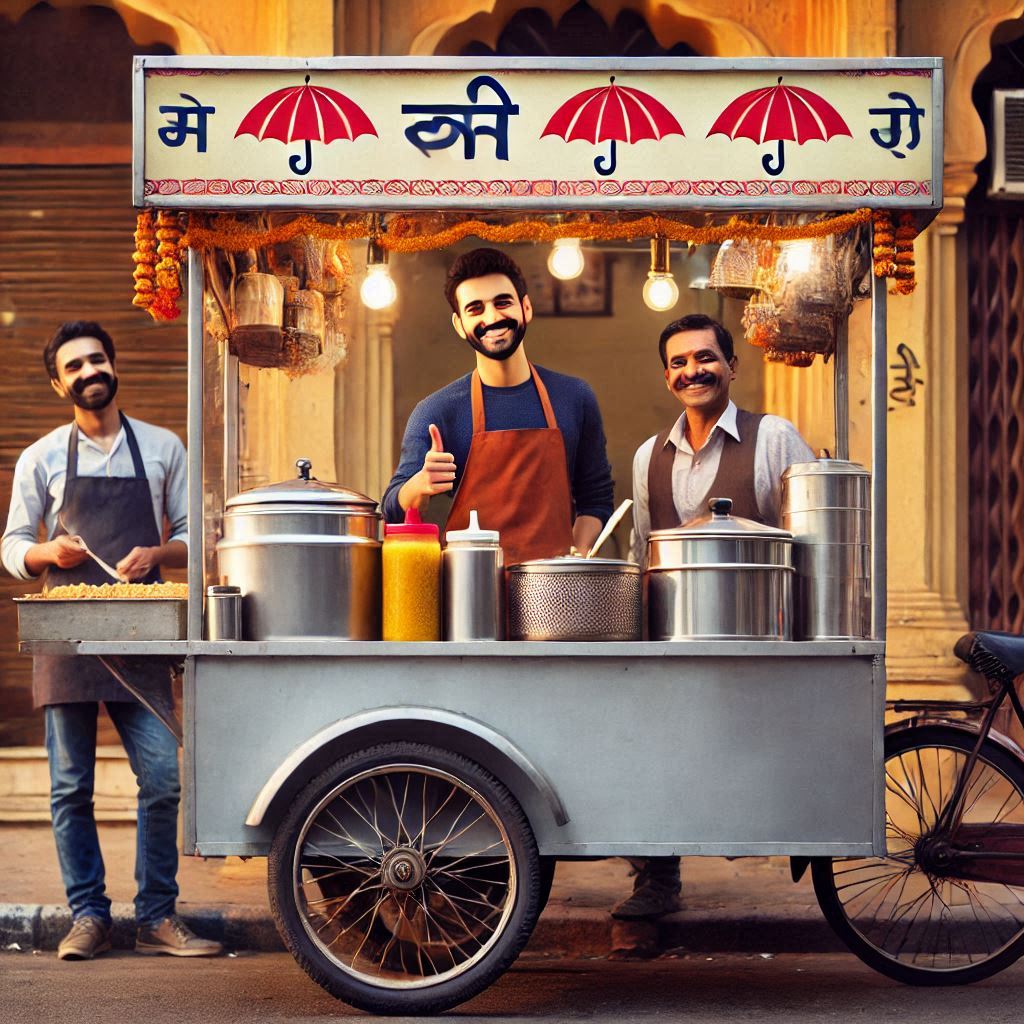
My friend, one of the two partners in this venture, works full time in IT. The entrepreneurial bug bit him, and along with another friend, also a corporate employee, they started this food stall, selling a food dish that is common in North India (and some parts of Eastern India, to some extent) as a street food. The stall was a simple handcart, with foldable sides, stationed adjacent to a food street (also called drive-in here) in the “IT” part of Hyderabad. The stall is operated by one employee, who does the cooking and the preparation. An additional small shutter in the drive-in complex for cooking and food preparation. Stall runs form 6.00 p.m. to about 11:30 p.m every day. Daily sales was estimated to be 30-40 plates, with more sales during weekends.
After a few weeks my friend wanted to know how to increase both awareness and sales. I took it up as a friendly project.
My approach:
I first had to some hands- on data regarding the stall. My approach is to visit the place myself, like a regular customer, so that I can-
- Get a streetside view of the place, and see what a passerby on the street gets to see
- Experience the business as a regular customer.
- Get to experience the product (taste, in this case) as a regular customer
- Get a sense of how the service side of things works
- Understand their operating process as much as I can observe.
So I visited the stall a few times without telling him or the stall staff. I bought a few plates like a regular customer. After a couple of visits, I had a casual conversation with the staff about the food, what customers say etc. I also spoke to a couple of customers to get their point of view.
What I observed
Overall, the stall was neat, hygienic and efficient. There was a crowd if three or more customers came at the same time, but it couldn’t be helped since there was a little prep involved.
While customers from North India were familiar with the dish and knew what they wanted, people from other places were not sure. They had doubts as to what it was, whether it was sweet, savoury, spicy, etc. and even whether it was non vegetarian.
The staff were unable to keep track of the number of plates sold. But he was keeping an approximate track of plates sold, which my friend says was being noted in an Excel sheet.
Additionally, although the business was showing up on Google maps, he was not responding to the reviews (mostly good) or had claimed the business.
My advice:
I basically advised him on three factors- Product awareness, business awareness and operations
Business awareness:
A business gets traction only when more potential customers become aware of it. The most important thing here was to claim the business on Google, and respond to the reviews.
Of course, Social Media presence was absolutely necessary, and I asked him to start and Instagram account for the stall. Why Insta? Well, most of his customers were youngsters, and from what I know, IG is the most popular one, especially for food. The content should be about the location, about the dish (more on that below), and get some reactions and reviews from his customers who come to the stall. If budget permits, he could rope in influencers who are relevant hyper-locally.
Product awareness:
Many customers were unfamiliar with the product, and needed to be told what it was about.
I suggested a simple print that stated the name, where it was from, key ingredients used in English and Telugu, and one line on how it was prepared. Plus, a prominent vegetarian symbol to reassure anyone who had doubts. This was absolutely necessary, since people came to the stall, would ask the stall guy, but he was usually too busy to give a proper answer.
I suggested he start an Instagram account (he had, but had not posted any content) and his content should include:
- How the dish is made
- How and why the ingredients make it a healthy option
- A brief introduction as to where it is from
- Reviews and reels from customers saying it is delicious.
Operations:
There was nothing much I could advise on operations, except that he ask the staff to keep a simple tally system (with a pen and paper) of tracking the number of plates sold. Over the medium to long term, some simple analysis would reveal patterns of busy days, light days, busiest time of the day or month etc. This could help them plan the raw material preparation in advance and avoid wastage.
Execution and results:
He loved the idea of an information card explaining about the dish, and implemented it. (He designed it himself on Canva with inputs from another friend). He agreed with my recommendations regarding social media, and claimed the business as his own. The reviews are mostly good, averaging 4.5 stars. He also agreed with my recommendations on Social Media. There were a lot of quick posts that came up in the next month or two. They have 80 plus followers and the engagement on some of the posts are high. He also persuaded a few others in his social circle with good follower numbers to post about the stall, and got some pretty good engagement from their followers.
They have standardised the prep and cooking part, although he is still being lax about keeping daily tabs. However, business is keeping steady, and he has opened up another stall in another place nearby, known for IT offices and young crowds.
Happy to be able to contribute something to a friend’s success in entrepreneurship.



 Strategic Marketing with Sachin
You must be logged in to post a comment.